Regional Licensing Effects on Variant Availability in Free-to-Play Wheel Simulations
Mara Hughes · Aug 12, 2026
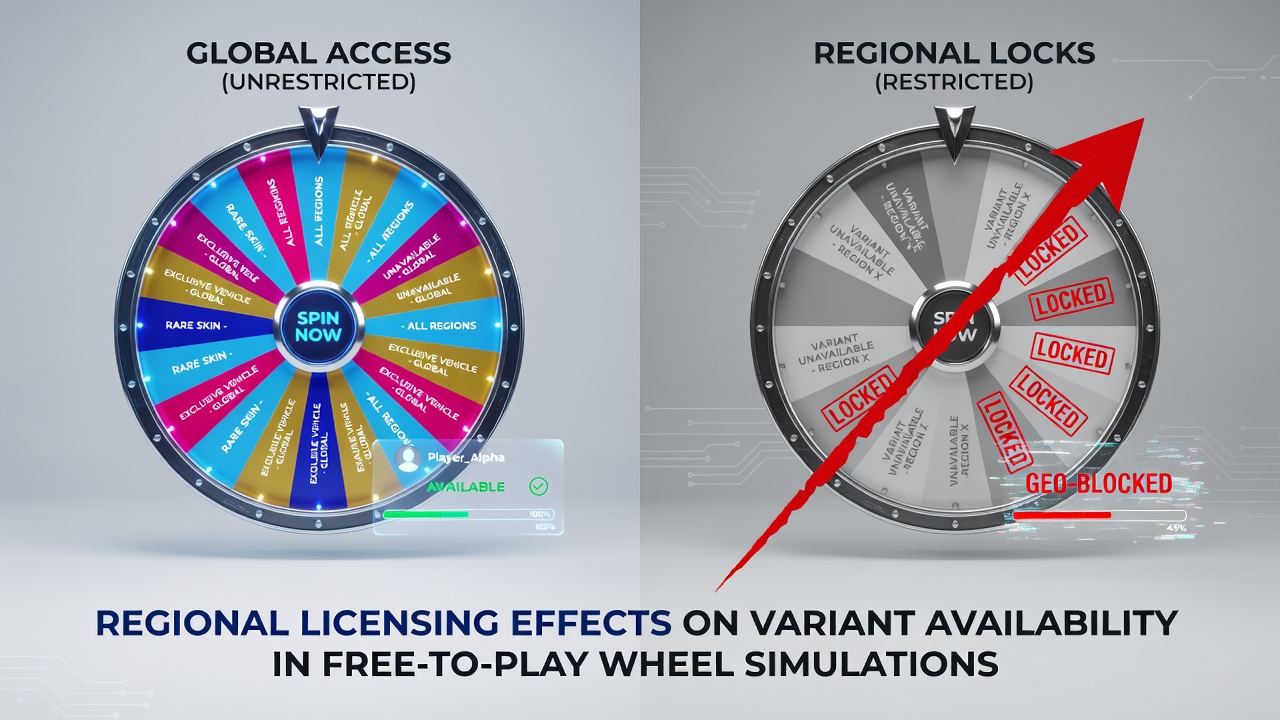
Regional Licensing Effects on Variant Availability in Free-to-Play Wheel Simulations
Regional licensing frameworks shape which wheel simulation variants reach players in free-to-play environments, and developers adjust offerings based on jurisdiction-specific rules that govern virtual gaming content. These regulations determine whether European-style wheels with single zero pockets or American configurations featuring double zeros appear in mobile apps and browser-based platforms, while also influencing the presence of specialized features such as named bet sectors or bonus mechanics. Data from industry reports shows that licensing bodies in North America and Europe impose distinct requirements on content distribution, which in turn limits or expands the catalog of available simulations for users in those areas.
Licensing Structures and Their Reach
Authorities in the United States enforce state-level approvals that often require separate certifications for each game variant before distribution through app stores or web portals, and this process creates staggered release schedules where certain wheel formats become accessible months later than others. In contrast, European Union directives coordinate across member states through harmonized standards that allow broader initial access but still impose content filters tied to consumer protection guidelines. Research from the European Gaming and Betting Association indicates that these coordinated approaches result in higher variant diversity within EU markets compared to fragmented state systems elsewhere, because developers can leverage one approval for multiple territories once core compliance checks clear.
Canadian provincial regulators add another layer by tying free-to-play licenses to age verification protocols and data localization rules, which affects how simulation providers package wheel variants for Canadian users. Those who've examined compliance filings note that provinces such as Ontario and British Columbia maintain separate review boards that evaluate each wheel configuration for fairness algorithms before granting distribution rights, and this leads to selective availability where American wheel variants appear less frequently than their European counterparts due to payout structure scrutiny.
Variant Availability Patterns by Region
Free-to-play wheel simulations typically feature core variants including single-zero European wheels, double-zero American wheels, and occasional hybrid designs with adjustable sector payouts, yet licensing directly controls which combinations operators can activate in specific markets. In Asia-Pacific jurisdictions, for instance, content approvals often prioritize simplified wheel formats that align with local digital entertainment classifications, resulting in reduced access to complex named-bet options until providers complete additional technical audits. Figures from the Australian Communications and Media Authority reveal that such classifications have led to a 35 percent difference in variant counts between Australian and Southeast Asian app stores during 2025 distribution cycles.
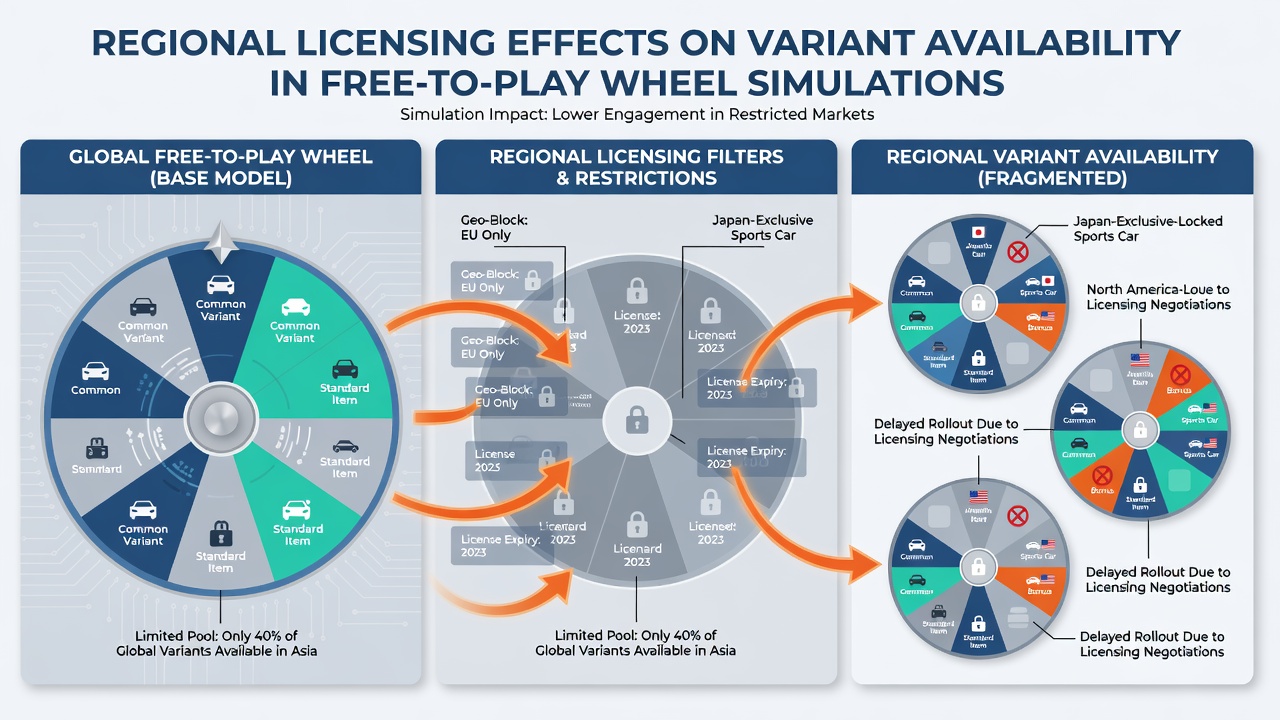
North American markets demonstrate similar constraints where some states permit only European wheel variants in free-to-play formats to align with responsible gaming mandates, while neighboring regions allow both configurations after supplementary fairness testing. Observers tracking app store data through August 2026 have documented that developers respond to these differences by creating region-locked builds, and users frequently encounter messages indicating that certain wheel simulations remain unavailable due to pending license reviews. This segmentation extends to bonus tier integrations, where promotional mechanics tied to specific wheel sectors require separate approvals that further delay rollout in heavily regulated zones.
Developer Adaptations and Platform Responses
Companies developing these simulations routinely maintain parallel version libraries that activate or deactivate wheel variants according to detected user location and associated licensing status, and this technical approach minimizes compliance risks while preserving core gameplay loops across territories. Platform operators such as major app marketplaces enforce their own content policies that intersect with government licensing, often requiring developers to submit variant-specific documentation before listing updates. Studies conducted by the University of Nevada's gaming research center have tracked how these overlapping requirements influence release timelines, showing that variants cleared in one region may wait additional review periods before appearing elsewhere.
What's interesting is how these licensing effects create feedback loops where player demand in approved regions influences future development priorities, prompting providers to accelerate certifications for high-engagement wheel formats first. In practice this means European wheel variants often receive earlier global pushes because multiple jurisdictions share overlapping approval pathways, whereas American configurations undergo more isolated evaluations that extend their availability windows. Industry associations including the World Lottery Association have published summaries noting that such patterns hold steady through mid-2026, with no immediate convergence expected without broader regulatory alignment.
Conclusion
Regional licensing continues to dictate the scope of wheel simulation variants accessible in free-to-play settings, and the resulting availability maps reflect a patchwork of approvals that developers navigate through targeted compliance strategies. As markets evolve through August 2026 and beyond, the interplay between government bodies, platform policies, and technical adaptations will sustain distinct regional catalogs rather than uniform global offerings. Those monitoring these trends can reference regulatory updates from sources such as the New Jersey Division of Gaming Enforcement or the Canadian Gaming Association for ongoing details on how licensing shapes content distribution.