Exploring Adjustments to Multi-Position Wagers in Response to Varying Bonus Structures Across Wheel Types
Klara Günther · Jun 21, 2026
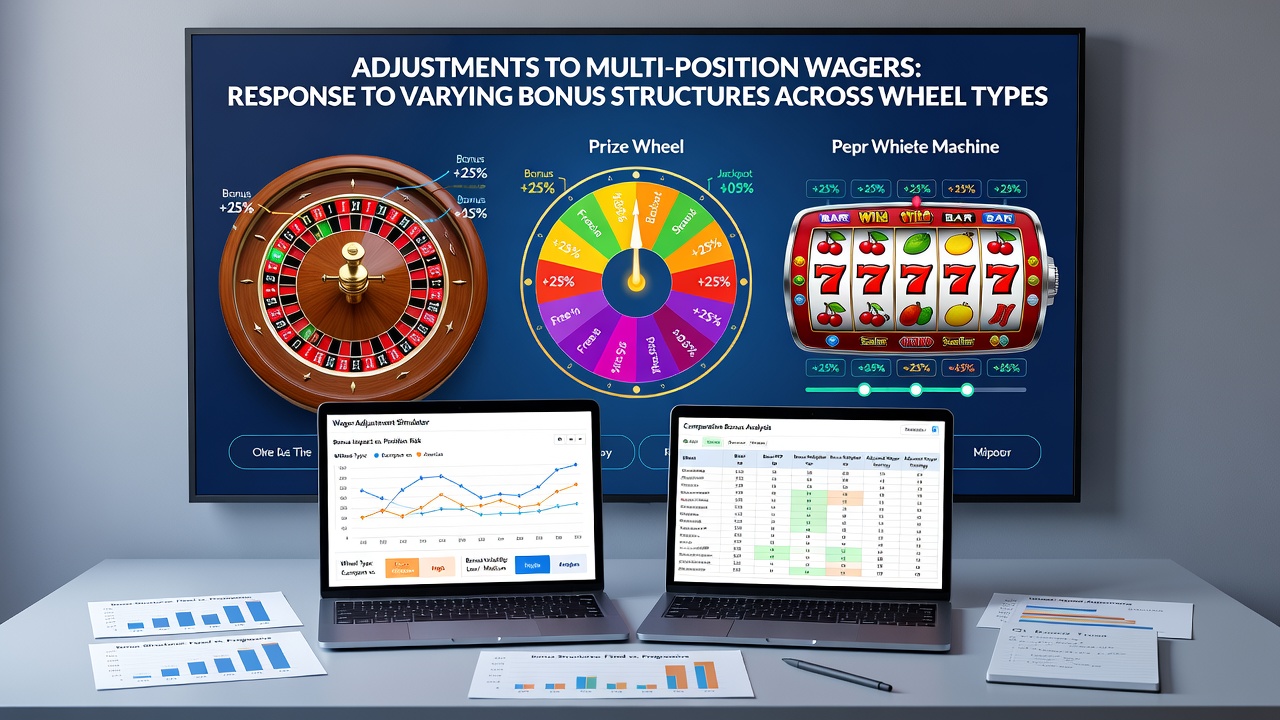
Exploring Adjustments to Multi-Position Wagers in Response to Varying Bonus Structures Across Wheel Types
Multi-position wagers such as sector bets and named combinations require players to cover several numbers at once, and these selections shift when bonus structures change across wheel formats. European wheels with a single zero present lower house edges than American wheels that include both a zero and double zero, which leads operators to apply different wagering requirements and contribution rates to bonuses depending on the variant in use. Data from regulatory filings indicate that bonus percentages often range between 50 and 200 percent, yet the eligible game types and maximum bet caps vary by wheel configuration.
Wheel Configurations and Their Influence on Bonus Eligibility
European and French wheels share the same number layout, but French rules add la partage or en prison options that return half the stake on even-money bets when zero appears. Operators frequently assign higher contribution percentages to these wheel types within bonus terms because the effective house edge drops during those outcomes. American wheels, by contrast, receive lower contribution rates in many promotional structures, and this distinction prompts adjustments in how many sectors players cover when clearing wagering requirements.
Observers note that platforms update their bonus terms periodically, and June 2026 saw several operators revise contribution tables to account for increased traffic on mobile European-wheel tables. Those revisions placed tighter caps on multi-position wagers, limiting the total stake per spin while still allowing smaller sector selections to count fully toward playthrough targets.
Bonus Structures and Their Direct Effects on Sector Coverage
Fixed-amount bonuses adn percentage-based match offers generate different constraints. A fixed bonus of 50 credits might restrict individual bets to 5 credits or less, forcing players to reduce the number of positions covered in a voisins du zéro or tiers bet. Percentage bonuses tied to deposits often include higher maximum bet allowances, yet they may exclude American wheels entirely during the promotional period. Research reports compiled by the Nevada Gaming Control Board show that contribution rates for roulette average 20 percent on European variants and 10 percent on American variants in many licensed operations.
When bonus structures lower the contribution rate, players respond by increasing the frequency of smaller multi-position wagers rather than concentrating on single large sector bets. This adjustment maintains steady progress toward wagering targets while respecting per-spin limits. One documented pattern involves shifting from full-table coverage to half-wheel combinations that still qualify under the updated rules.

Regional Regulatory Data and Observed Adjustments
Figures released by the Ontario Lottery and Gaming Corporation reveal that bonus-related play on roulette increased 18 percent in the first half of 2026, with the largest share occurring on European wheels. Players adjusted their multi-position selections by favoring bets that cover 9 to 12 numbers rather than the full 17-number voisins combinations when facing stricter maximum-bet rules. These shifts align with the need to keep total exposure within the permitted stake while still accumulating the required wager volume.
Industry reports from the Malta Gaming Authority further indicate that operators introduced tiered bonus structures in early 2026, where higher deposit tiers unlocked elevated contribution percentages only on French-rule wheels. In response, users expanded their use of call bets that combine straight-up numbers with split positions to optimize both coverage and contribution speed. The pattern demonstrates how regulatory environments and bonus mechanics interact to shape wager construction across wheel types.
Practical Examples of Strategy Adaptation
Take one platform that applied a 100 percent match bonus capped at 100 credits with a 30-times wagering requirement. On its American-wheel tables the maximum allowed bet dropped to 2 credits per spin, prompting users to break traditional 6-number sector bets into multiple 2-credit placements across separate spins. On European tables the same bonus permitted 4-credit bets, allowing retention of standard 8-number half-wheel combinations while still meeting the playthrough target within fewer rounds.
Another case involved a no-deposit bonus of 25 credits restricted to French wheels. Players adapted by selecting orphan bets and zero-game combinations that covered 5 or 6 numbers, thereby stretching the bonus across more spins without exceeding the per-bet ceiling. These modifications appear consistently in session logs published in aggregated operator reports.
Conclusion
Adjustments to multi-position wagers emerge directly from the interaction between wheel-specific house edges and the precise wording of bonus terms. European and French configurations receive more favorable contribution rates in many structures, leading to broader sector coverage options, whereas American wheels prompt narrower selections and higher spin frequency. Data compiled through 2026 continue to illustrate these patterns across multiple regulatory jurisdictions, showing that players modify their bet construction in measurable ways to align with each set of rules.