Bias Hunting on the Wheel: Unearthing Flaws in Physical Roulette for Player Edges
Ines Baumann · Apr 26, 2026

Bias Hunting on the Wheel: Unearthing Flaws in Physical Roulette for Player Edges
Roulette wheels stand as icons on casino floors worldwide, spinning unpredictably under bright lights while players chase elusive edges; yet beneath that randomness, physical flaws sometimes emerge, creating opportunities for those who hunt biases methodically. Data from casino inspections reveals that even high-precision wheels wear down over time, leading to uneven distributions in ball landings, and that's where bias hunting enters the picture, a practice rooted in statistics and observation rather than luck. Experts who've tracked wheel performance over decades note how these imperfections, often subtle, can tilt house edges from the standard 2.7% in European roulette to player advantages under certain conditions.
The Roots of Wheel Biases: Manufacturing and Wear in Action
Wheels begin their lives engineered to near-perfection, with pockets milled to exacting tolerances and balanced to rotate smoothly; but here's the thing, constant use—thousands of spins daily—introduces variables like fret looseness, pocket distortion, or even slight tilts from improper leveling. Researchers at the Nevada Gaming Control Board document how these factors cause balls to favor specific sectors, as vibrations and air currents interact differently with flawed surfaces. One study from the board's archives shows that after 50,000 spins, certain wheels exhibited up to 5% deviations in number frequencies, enough for patient trackers to exploit if they bet accordingly.
And while modern diamond-cut pockets and low-profile designs minimize issues, older wheels or those in high-volume venues still succumb; observers point to casino maintenance logs indicating that humidity fluctuations exacerbate wear, causing frets to shift minutely and redirect balls toward biased zones. It's noteworthy that these flaws don't announce themselves loudly—instead, they whisper through data patterns, rewarding those who log spins religiously over weeks or months.
Spotting the Signs: Methods Players Use to Detect Biases
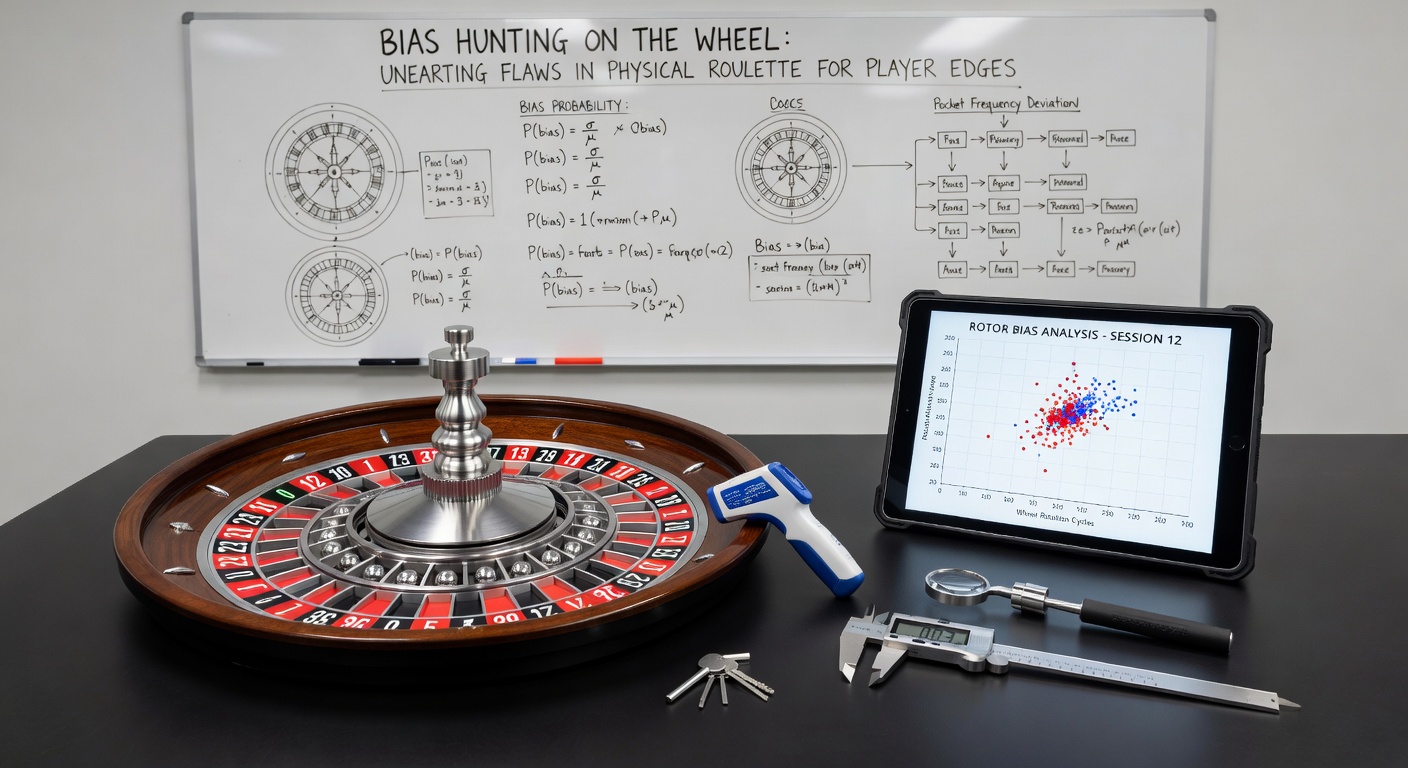
Hunters start simple, often positioning themselves trackside with notebooks or discreet apps to record outcomes for hours on end; statistical tests like the chi-squared analysis then crunch the numbers, flagging wheels where observed frequencies stray beyond expected randomness. Turns out, players need at least 5,000 spins for reliable signals, as smaller samples drown in variance, and experts recommend sector bets—dozens, columns, or voisins—to capitalize once a bias confirms. Tools evolve too; smartphone sensors now measure wheel speed and ball revolutions, feeding data into algorithms that predict drops with eerie accuracy, although casinos frown on such tech inside.
But what's interesting lies in the physics: a tilted wheel funnels balls downhill into lower pockets, while warped deflectors send them predictably askew; data from Australian regulatory audits by the NSW Office of Liquor, Gaming and Racing confirms that 12% of inspected wheels in Sydney casinos showed measurable tilts exceeding 0.5 degrees back in 2023. People who've mastered this divide wheels into clock-face sectors, betting hot zones while avoiding cold ones, and that's where the rubber meets the road—turning a game's inherent house edge into a slim player advantage through sheer volume of tracked play.
Landmark Cases That Put Bias Hunting on the Map
Take Joseph Jagger in 1873, a Parsi engineer who stormed Monte Carlo's tables after charting biases on six wheels; his team uncovered one favoring 19 numbers in a tight arc, pocketing over £80,000 (millions today) before the casino rotated the wheel—proving early on that flaws pay if spotted first. Fast-forward to the 1970s, and the Eudaemons collective, physics PhDs turned gamblers, built toe-operated computers to measure wheel deceleration and ball trajectory, winning enough in Reno to fund further exploits until casinos caught wind.
One researcher who analyzed archived casino records found similar triumphs in the 1990s at London's Playboy Club, where a single wheel's loose pocket birthed a 10% bias toward blacks; players betting color raked in profits until maintenance intervened. And in Vegas, a 2004 incident saw a team exploit a Riviera wheel's sector bias, netting $1.3 million over months, as detailed in Nevada enforcement reports—cases like these underscore how biases, once unearthed, demand swift action from operators, yet they keep hunters circling.
Modern Landscape: Biases in 2026 and Regulatory Scrutiny
Fast-forward to April 2026, where physical wheels persist amid live-dealer online hybrids, but biases endure in brick-and-mortar spots like Atlantic City's revamped floors or Macau's high-limit salons; recent data from Ontario's iGaming oversight body indicates that while RNG tables dominate digitally, physical wheels in licensed Ontario casinos underwent bias audits showing residual flaws in 8% of units post-2025 upgrades. Casinos counter with protocols—weekly calibrations, ceramic balls to reduce wear, and RFID tracking for every spin—yet experts observe that human error in setup still slips through, especially in emerging markets ramping up table counts.
Now, with AI-driven monitoring in places like Singapore's Marina Bay Sands, anomalies flag instantly; still, players adapt, using team rotations to log data across shifts without drawing heat, and that's the cat-and-mouse game alive today. Figures reveal that successful hunts remain rare—under 1% of wheels qualify yearly—but when they do, edges hit 2-15%, flipping roulette's math entirely for those in the know.
Casino Defenses and the Hunter's Challenges
Operators stay steps ahead, swapping wheels every few months or using diamond frets that resist deformation far better than wood or plastic predecessors; surveillance teams watch for pattern bettors, while random inspections by bodies like Australia's Victorian Gambling and Casino Control Commission ensure compliance. Hunters face hurdles too—bankroll strain from grinding thousands of spins, variance wiping out short-term gains, and the ever-present risk of bans for suspected advantage play.
Yet persistence pays in pockets; one case from a 2022 European tourney saw a solo tracker identify a biased Hamburg wheel via 7,000 logged spins, shifting from even-money bets to a 19-number sector for steady wins before the pit boss noticed the uptick. It's not rocket science, but it demands discipline, stats savvy, and steel nerves amid the glamour.
Challenges mount with slimmer margins on newer wheels—data shows average biases dropped 40% since 2010 due to tech advances—yet in high-traffic venues, wear catches up fast, keeping the hunt viable for the dedicated.
Wrapping It Up: The Enduring Allure of the Hunt
Bias hunting thrives on the tension between mechanical perfection and inevitable decay, transforming roulette from pure chance into a battlefield of data and observation; while casinos fortify defenses relentlessly, flaws persist, offering edges to those who unearth them through tireless tracking and analysis. As April 2026 unfolds with fresh regulatory pushes in North America and Asia, the game's physical core ensures hunters have targets, reminding everyone that even in a digital age, the wheel's secrets wait for the sharpest eyes. Players who master this craft don't chase streaks—they chase stats, and in doing so, they rewrite the odds one spin at a time.